

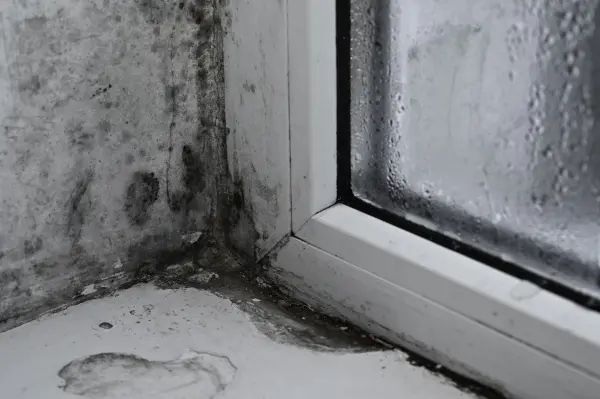
Awaab’s Law Scotland came into force on 6 October 2026. Officially called the Investigation and Commencement of Repair (Scotland) Regulations 2026, it gives landlords fixed deadlines once they learn of damp or mould. You must have it investigated within 10 working days and send your tenant a written summary within 3 working days. Where the problem is substantial, repairs must start within 5 working days. Unlike England, Scotland applies these rules to private landlords from day one.
Damp and mould have never been a minor matter for Scottish landlords. The Repairing Standard already required private landlords to keep a let property in a reasonable state of repair. What it lacked, until this month, was a clock.
That has now changed. Since 6 October, a tenant’s call, email or text about mould on a bedroom wall starts a statutory timetable running. As a result, how quickly you or your letting agent respond is no longer just good practice. It is a legal duty, and the Tribunal will look at it.
Most landlords who keep on top of maintenance will notice little difference day to day. Even so, the new rules reward good records and quick communication. This guide explains what Awaab’s Law in Scotland requires, who it covers and what landlords in Fife and Kinross should do before winter sets in.
What Is Awaab’s Law?
Awaab’s Law is named after Awaab Ishak, a two-year-old who died in 2020 from a respiratory condition caused by prolonged exposure to mould. His family lived in a housing association flat in Rochdale, and their complaints had not been acted on quickly enough. His death led to legal deadlines for social landlords in England, which took effect in October 2025.
The Scottish Government committed to its own version in 2025. The result is the Investigation and Commencement of Repair (Scotland) Regulations 2026, which the Scottish Parliament approved and Ministers made on 24 March 2026. They came into force on 6 October 2026.
That is the same day as several changes under the Housing (Scotland) Act 2025, which is why you may have seen the two discussed together. In fact, they are separate pieces of law, and we explain the difference in the FAQs below.
Who Does Awaab’s Law in Scotland Apply To?
In short, almost every landlord. The rules cover councils, housing associations and private landlords alike. For private lets, they work by amending the Repairing Standard in the Housing (Scotland) Act 2006. They therefore reach any tenancy the Repairing Standard covers, including the private residential tenancy and most other private tenancies.
A few arrangements sit outside the rules. According to the Scottish Government’s guidance for landlords, occupancy agreements are not tenancies and mobile homes are not houses, so the rules do not catch either. Certain tenancies listed in section 12(1) of the 2006 Act also fall outside them.
Crucially, the duties only apply where the damp or mould affects a part of the building you are responsible for, and the repair is yours to carry out. That question is not always simple in a tenement or flatted block, where the source may lie in a common roof or shared drainage. If you are unsure, take advice early rather than let the clock run down.
The New Damp and Mould Timescales
Once a tenant tells you about damp or mould, or you otherwise become aware of it, four deadlines apply:
- Investigate within 10 working days. A competent person must establish whether the home is substantially free from damp and mould and, if not, what work it needs.
- Report within 3 working days. After the investigation finishes, you have three working days to give the tenant a written summary of the findings.
- Start repairs within 5 working days. Where the investigation finds substantial damp or mould, the repair work must start within five working days of it concluding.
- Finish as soon as reasonably practicable. Private landlords have no fixed completion deadline, but must not drag their feet. Social landlords, by contrast, have a 20-working-day limit.
Each period starts on the day after you are told or become aware. A working day excludes weekends and Scottish bank holidays. In other words, the time from a tenant’s report to work starting can be as little as 15 working days, or roughly three weeks.
If you use a letting agent, it is safest to assume the clock starts when your tenant tells the agent. Equally, a damp patch spotted during a routine inspection may count as you becoming aware, even if the tenant never mentions it.
A New Line in the Repairing Standard
This is the change that has had the least attention. Alongside the deadlines, the regulations add a new requirement to the Repairing Standard itself: the house must be substantially free from damp and mould. Landlords must also have regard to the Scottish Government’s guidance when deciding whether a property meets that standard.
Why does this matter? Firstly, the Repairing Standard is the test the First-tier Tribunal for Scotland (Housing and Property Chamber) applies when a private tenant complains about disrepair. The Tribunal must now consider whether you met the Awaab’s Law timescales when deciding whether you carried out repairs within a reasonable time.
Secondly, enforcement has real teeth. The Tribunal can issue a Repairing Standard Enforcement Order requiring the work. Failing to comply with that order without reasonable excuse is a criminal offence. On top of that, the Tribunal can make a Rent Relief Order restricting the rent until you comply, and the council can carry out the work and recover the cost from you. The enforcement chapter of the guidance sets this out in full.
Finally, when you register or renew as a landlord, you confirm that your property meets the Repairing Standard. We covered what that declaration involves in our guide to the private landlord registration rules in Scotland. That confirmation now includes damp and mould.
What Counts as “Substantial” Damp or Mould?
Not every speck of mould on a window seal will need repair work. However, every report needs an investigation. The guidance asks investigators to consider how far the damp or mould has spread, whether it keeps coming back, and how vulnerable the occupants are. A small patch may be minor for a healthy adult but significant for a household with a newborn or someone with asthma.
Equally important, the guidance tells landlords not to assume a tenant has caused the problem. Drying clothes indoors can cause condensation, of course. So can a failed extractor fan, a blocked gutter or a defective damp-proof course. The investigation must find the root cause. Indeed, the guidance says a mould wash on its own is unlikely to count as a suitable repair if the mould simply returns.
Where the damage genuinely results from the tenant’s failure to use the property properly, the repair duty may not apply. The Scottish Association of Landlords notes that this exemption remains. Even so, you will need clear investigation findings to rely on it.
Who counts as a competent person? The rules define it as someone who, in your reasonable opinion, has the skills and experience to judge whether the home is substantially free from damp and mould. For a straightforward case, that might be an experienced property inspector. For persistent or widespread damp, a specialist surveyor is usually the safer choice.
When You Cannot Meet the Deadlines
The rules accept that things go wrong. If circumstances beyond your control stop you investigating or starting work on time, you must tell the tenant in writing. Your notice should say which duty you cannot meet, why, and when you expect to meet it.
Meanwhile, you must take reasonable steps, where practicable, to limit the damp or mould. That could mean a temporary mould treatment, a temporary extractor fan or sealing a leak.
The guidance gives these examples of circumstances beyond a landlord’s control:
- severe weather or travel problems that prevent safe access
- illness or bereavement, affecting either landlord or tenant
- unexpected contractor or supply shortages
- being unable to get access despite reasonable attempts
- delays in getting permissions from outside bodies
Notably, a busy diary or a holiday is not on that list. If you expect to be unavailable for a long period, the guidance expects you to arrange cover. Above all, keep dated records of every report, visit, call and letter. If a tenant complains, it will be up to you to show what you did and when.
How Scotland Compares With England
England introduced its version on 27 October 2025, but only for social housing. The UK Government only began consulting on extending it to private landlords on 9 October 2026, and that consultation runs until 18 December 2026. Scotland, by contrast, has applied Awaab’s Law to private landlords from the outset.
That difference matters when you read about the rules. Much of the national property press describes English social housing rules, including emergency deadlines that are not part of Scotland’s damp and mould law. So, if an article never mentions the Repairing Standard or the First-tier Tribunal, it is probably not about Scotland.
It is also worth keeping things in proportion. According to the Scottish House Condition Survey 2024, 90% of Scottish homes were free from any damp or condensation, and 92% were free from mould. Fife also sat below the national average for rising or penetrating damp between 2022 and 2024, at 2% against 3% across Scotland, according to the survey’s local authority tables. In other words, most landlords will rarely need the process. The point is to make sure nothing slips when they do.
Your Awaab’s Law Checklist
Work through these steps now, before the winter condensation season:
- Make reporting easy. Give every tenant a clear way to report damp or mould, and confirm it in writing.
- Log every report. Record the date and time it arrived. That is day zero for the deadlines.
- Line up a competent person now. Decide who will carry out investigations before you need them, not after.
- Use a written summary template. The Scottish Government’s guidance includes a blank template you can adapt.
- Fix the cause, not the symptom. Budget for ventilation, guttering and roof repairs, not only mould treatment.
- Check fans and ventilation at every inspection. Note what you find and take photographs.
- Keep a paper trail of delays. Record every access attempt and every contractor contact.
- Take advice before disputing a report. Blaming lifestyle without evidence is exactly what the guidance warns against.
Frequently Asked Questions About Awaab’s Law in Scotland
When did Awaab’s Law come into force in Scotland?
Awaab’s Law came into force in Scotland on 6 October 2026. Its formal name is the Investigation and Commencement of Repair (Scotland) Regulations 2026. According to the Scottish Government’s tenant guidance, reports made before that date are not subject to the new timescales. However, landlords still had to meet the Repairing Standard for those cases.
Does Awaab’s Law apply to private landlords in Scotland?
Yes. Unlike the English version, Awaab’s Law in Scotland applies to private landlords as well as councils and housing associations. Because it works through the Repairing Standard, it covers the private residential tenancy and most other private tenancies. Private landlords must investigate, report and start repairs on the same timescales as social landlords.
Is Awaab’s Law part of the Housing (Scotland) Act 2025?
Not exactly, although the two are often confused. Awaab’s Law is a set of Regulations, not an Act. For private landlords, Ministers used a power that already existed in the Housing (Scotland) Act 2006. The 2025 Act widened the equivalent power for social landlords, and several of its own changes also took effect on 6 October 2026.
What happens if a landlord misses the deadlines?
A private tenant can apply to the First-tier Tribunal, which must take any missed deadlines into account. The Tribunal can order repairs through a Repairing Standard Enforcement Order, and ignoring that order without reasonable excuse is a criminal offence. Social tenants, meanwhile, can claim compensation of £15 plus £3 for each working day of delay, capped at £100 per repair.
Who can carry out a damp and mould investigation?
The rules require a “competent person”. That means someone who, in your reasonable opinion, has the skills and experience to decide whether the home is substantially free from damp and mould. It need not always be a specialist surveyor. However, you should be able to explain why you chose them.
Can a tenant be evicted for reporting damp or mould?
No. The Scottish Government’s tenant information makes clear that reporting repair issues is not a reason a tenant can be evicted. Landlords should also avoid treating a report as a nuisance. A prompt, documented response protects both you and your tenant.
Why Choose Morgans?
Morgans has helped landlords and property owners across Dunfermline, Kinross and West Fife since 1993. We are both solicitors and letting agents, so legal advice and day-to-day property management sit under one roof.
That combination suits rules like these. Our letting service includes regular property inspections, prompt handling of maintenance and help with compliance, from gas and electrical safety to landlord registration. We even have our own lettings property inspector, so early signs of damp are more likely to be spotted before they become a complaint. For managed properties, reports come straight to our lettings team, who log them and agree the next steps with you.
Where a problem escalates, our residential property solicitors are on hand. And if new regulation has you rethinking whether to keep a rental property at all, our estate agency team can arrange a free property valuation and walk you through our Sellers Guide. You can also meet our lettings team online.
Talk to Our Lettings Team
Not sure your process is ready for Awaab’s Law? Call our Dunfermline office on 01383 620222 or our Kinross office on 01577 863424, or send us a message through our online enquiry form. We will give you straightforward, practical advice and help you get things in order before the first report lands.